What Do Goats Eat? What I Feed Mine, Minerals I Use & What I Avoid

Updated: Oct 17
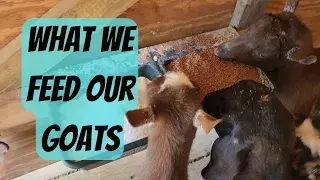
If you are getting goats for the first time, feeding them sounds like it should be the easy part.
Then you start reading about hay, forage, grain, copper, loose minerals, mineral blocks, treats, baking soda and poisonous plants, and suddenly feeding a goat feels like you need a degree in goat nutrition.
We have learned a lot through trial and error with our goats, and this is the feeding routine that has worked for us. I am not saying this is the only way to feed goats. Their needs can change with age, pregnancy, lactation, health, forage quality and even where you live. This is simply what I do with mine and what I would tell a friend who was getting goats for the first time.
Watch My Goat Feeding Video
If you would rather read it, here is the longer version—with a couple things I would explain a little differently now than I did when I first filmed the video.
First: Goats Are Not Garbage Disposals
You will hear people joke that goats eat everything.
And yes, goats will absolutely put things in their mouths that make you question every decision they have ever made.
That does not mean everything they are willing to eat is good for them. Their diet still matters, and I try to keep mine based around the things goats are actually designed to eat: quality forage, hay, the right minerals and plenty of clean water.
The Foundation of My Goats’ Diet: Hay and Forage
The two biggest parts of my goats’ diet are hay and forage.
Goats are browsers. When mine are out, they would much rather wander around eating leaves, brush, weeds and bits of trees than stand in one spot eating a perfectly manicured lawn like a tiny cow.
Hay fills in the gap and gives them a dependable source of forage when they are not browsing or when what is growing outside is not enough.
The Hay I Feed My Goats
For my herd, I have stuck with Coastal Bermuda hay. It is what they have eaten from the time they were young, they eat it well, and it has worked for our setup.
Some goat owners use different grasses, mixed hay or alfalfa depending on the animals they have, what those goats need and the area you live in or what is available. I personally like keeping the basic hay consistent and changing the rest of the diet only when I actually have a reason to.
Our Homemade Hay Feeders
We made our hay feeders out of trash cans, and for our herd and the size of those feeders, I usually refill them about every week with 8 goats in our herd.
That is not me telling you to only feed a goat once a week. The hay is available to them during that time; that is simply how long our filled feeders tend to last. How often you refill yours is going to depend on how many goats you have, how big the feeder is, how much they are browsing and how much hay they waste.

This is what we use to make our hay feeders. We drill holes all the way around the can so the goats can pull the hay through, and an entire square bale fits perfectly inside. It has been such a simple way for us to turn something basic into a hay feeder that actually works for our setup.
This is our actual hay-feeder setup. I drill holes around the can, put an entire square bale inside, and the goats pull the hay through the openings as they eat.


The Grain Mix I Make for My Goats
Grain is something I do feed my goats, but I do not treat it like the foundation of their diet. Hay and forage still come first for me. Grain is a supplement I use more intentionally when a goat has higher nutritional demands.
I make my own grain mixture using:
Oats
Barley
Sunflower seeds
Milk Maker goat feed
Alfalfa pellets
I am sharing the ingredients here, not a one-size-fits-all recipe or feeding amount. The right amount depends on the goat, its size and body condition, the quality of the hay or pasture, pregnancy stage, milk production and the rest of the ration.

Who Gets More Grain Here
I use this mixture the most for my pregnant does—especially as their needs increase later in pregnancy—and for does that are being milked. Pregnancy and milk production can raise a doe’s energy and protein needs, so this is where grain makes the most sense in my own herd.
The rest of our herd gets a small amount once a day. I do not keep grain available free choice, and I do not want any goat standing there eating a huge meal of concentrates just because they would happily do it.
Why I Am Careful Not to Overfeed Grain
More grain is not automatically better. Goats are ruminants, and a large amount of rapidly fermentable grain—especially if they are not used to it—can upset the rumen fast. Grain overload can cause ruminal acidosis, and heavy carbohydrate intake can also set the stage for enterotoxemia, sometimes called overeating disease.
That is why I make feed changes gradually, keep good forage available, and use grain as a supplement rather than turning it into the main course. If I need to increase grain for a pregnant or milking doe, I would rather work up slowly than dump a much larger amount in the feeder overnight.
Wethers and Male Goats Need Extra Attention With Grain
This is one area I think every new goat owner should know about. Wethers and other male goats can develop urinary calculi—mineral stones that can block the urinary tract. A blockage can become life-threatening very quickly.
High-concentrate diets can increase the risk because cereal grains tend to be high in phosphorus and low in calcium. For male goats, the overall ration needs an appropriate calcium-to-phosphorus balance; a common target used in goat-feeding guidance is about 2 parts calcium to 1 part phosphorus, along with plenty of fresh water.
Because I mix several ingredients together, I do not assume the finished ration is perfectly balanced just because each ingredient is commonly fed to goats. If you are making your own grain mix—especially for wethers—check the feed labels and the whole diet, and get help from a veterinarian or livestock nutritionist if you are unsure. Alfalfa adds calcium, but that does not automatically guarantee the entire mixture has the right mineral balance.
And if a male goat is repeatedly straining to urinate, stretching, kicking at his belly, dribbling urine or unable to pass urine, I would treat that as an emergency and call a veterinarian right away.
Loose Goat Minerals Are a Big Deal
Minerals were one of the things I had to learn more about after getting goats.
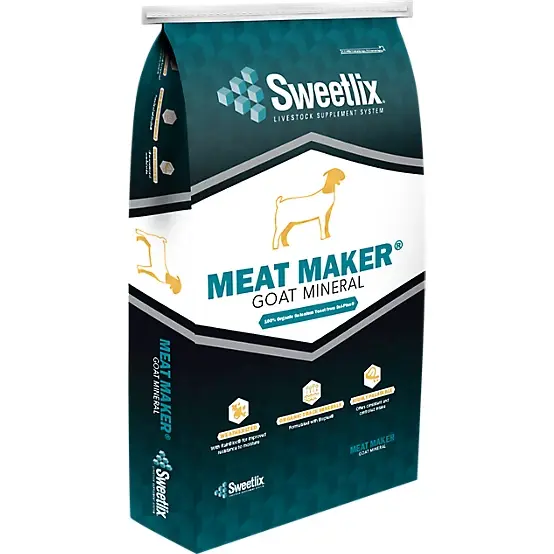
I prefer a balanced loose mineral made specifically for goats rather than relying on a generic livestock block. Loose minerals are easier for goats to consume in useful amounts, and a goat-specific product is formulated around goat nutritional needs instead of trying to cover several species at once. The brand i recommend is Sweetlix Meat Maker Goat Mineral.
Why Copper Comes Up So Much With Goats
Goats have higher copper requirements than sheep, which is why I do not use a sheep mineral as my goat mineral.
One thing I would word differently from my older video is this: sheep do need copper too—they are simply much more sensitive to too much of it. Goats can also get too much copper, so more is not automatically better. Mineral needs can vary with your forage, water and local soil, which is why I would rather use a properly balanced goat mineral than start adding extra copper on my own.

Loose Mineral vs. a Mineral Block
This is another place where I have a pretty strong preference: I use loose mineral.
A mineral block is not automatically poisonous or forbidden, but goats may have a harder time consuming enough mineral from a hard block. A loose free-choice goat mineral lets them lick it much more easily.
Brands I have personally liked include Manna Pro and Sweetlix. Look at the actual label and whether the product is appropriate for your herd before choosing based only on a brand name.

I Let My Goats Browse—but I Do Not Trust Them to Identify Every Poisonous Plant
I let my goats out to browse in the woods, and they eat leaves, brush and all kinds of things they find naturally.
In the video I said goats often know what they should and should not eat. There is some truth to the fact that well-fed livestock often avoid many unpalatable toxic plants—but I would never rely on that as my safety plan.
Goats can still eat poisonous plants, especially if forage is limited, they are hungry, a plant has been cut or wilted, or they simply decide to sample something. If you are letting goats browse your property, learn what is growing there and identify plants that are toxic to livestock instead of assuming the goats will know better.
What I Give My Goats for Treats
When I give treats, I tend to keep them simple and closer to foods they might naturally eat instead of making processed treats a huge part of their diet.
Apples
Pears
Watermelon
Strawberries and blueberries
Lettuce and other suitable fresh vegetables
Treats are treats, though. I am not replacing their hay and forage with a bowl of fruit just because they would happily let me.
And anytime I am introducing something new, I would rather give a small amount than suddenly change the whole diet. A goat’s rumen likes consistency a whole lot more than the goat’s personality would lead you to believe.
And this is what watermelon treat day looks like around here.

Clean Water, All the Time
This part is simple: my goats always need access to clean, fresh water.
Water is one of those basic things that is easy to overlook because it is not exciting, but it affects how much they eat and how well their whole digestive system works. I would rather dump a questionable bucket and refill it than decide it is probably fine.
What About Free-Choice Baking Soda?
I have kept a small container of plain baking soda available to my goats, and that is something I talked about in the video.
What I would not say now is that baking soda is a “medicine” that prevents bloat or that you can count on it to fix a goat whose belly is dangerously swollen.
Some goat owners do offer sodium bicarbonate free choice, particularly in certain feeding programs, but good forage management and avoiding abrupt diet changes matter much more. If a goat has a suddenly distended left side, is repeatedly getting up and down, kicking at the belly, grunting, struggling to breathe or otherwise looks like it may be bloating, I would treat that as urgent and call a veterinarian—not wait to see whether the goat eats some baking soda.
What I Would Tell Someone Getting Goats Tomorrow
Start with good-quality hay and appropriate browse or pasture.
Keep clean water available at all times.
Use a balanced loose mineral intended for goats.
Do not assume a sheep or generic livestock mineral automatically meets a goat’s needs.
Learn the poisonous plants on your own property before turning goats loose to browse.
Keep treats moderate and make diet changes gradually.
If something about a goat’s eating, rumen or behavior suddenly looks wrong, do not be afraid to call your vet.
Biggest thing is do your research!
Goat Feeding Has Been a Lot of Learning as We Go
That is probably the biggest theme of owning goats for me.
You learn something. You try something. You realize there is a better way. You change it. And then one of the goats does something you never considered and starts the whole learning process over again.
If I can share some of those lessons and help somebody start out with a little more information than I had, then that is exactly why I keep talking about this stuff.
If you have a goat-feeding question, leave it in the comments. There is a pretty good chance it can become the next goat question I answer here.
Keep Reading
If you liked this one, here are a few more from Vee's Gathered Life:
Want the Next Post Sent Straight to You?
New recipes, homestead life, seasonal ideas, Amazon finds & real-life favorites twice a week — every Monday & Friday.


Comments